Capture Knowledge & Life's Moments with
Write, organize, and connect your thoughts, notes, and docs in one place.
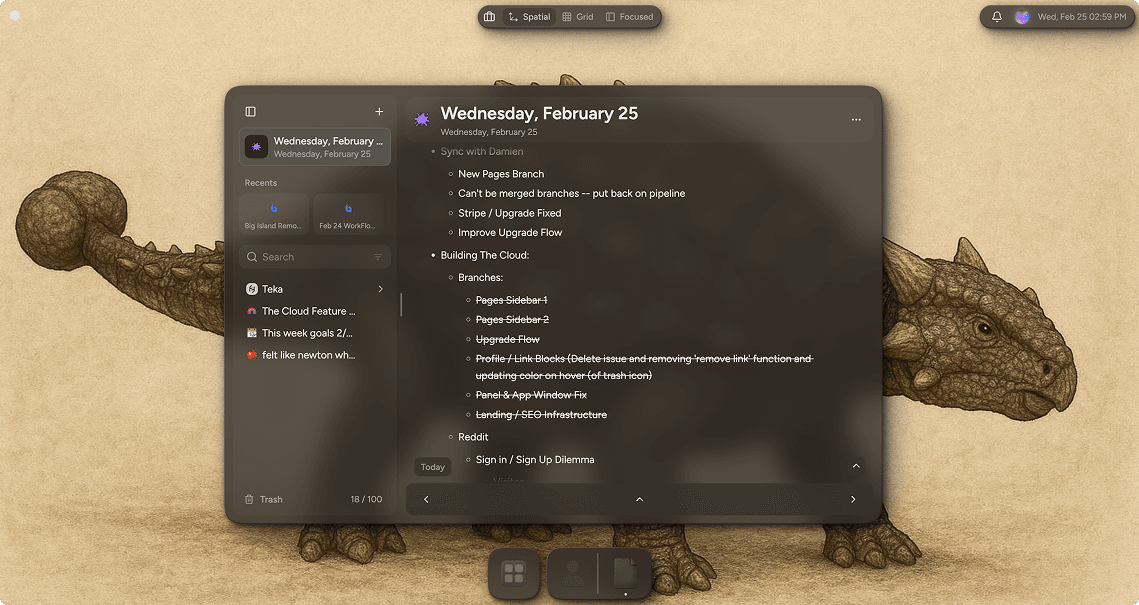
If you're comparing Pages to tools like Notion, Google Docs, Microsoft Word, Craft, Apple Notes, or Evernote, here's how they differ. Pages is connected to the other tools and systems our users (Creators, Builders, Artists, and Brands) use daily.
What Notion is known for: Flexible databases and internal documentation systems.
Where Pages differs: Pages connects writing to commerce, files, scheduling, and identity inside one system. It focuses on structured content that operates, not just documents.
What Google Docs is known for: Collaborative document editing and real-time comments.
Where Pages differs: Pages integrates content with products, tasks, calendar, and AI. It's not just a document editor; it's part of a connected workspace.
What Microsoft Word is known for: Traditional document authoring and formatting.
Where Pages differs: Pages is browser-based, collaborative, and connected to live systems like commerce and scheduling. It focuses on structure over formatting complexity.
What Craft is known for: Clean writing experience and structured documents.
Where Pages differs: Pages extends beyond writing into commerce, client portals, and AI-assisted workflows inside a unified system.
What Apple Notes is known for: Quick note capture and simple organization.
Where Pages differs: Pages supports structured documents, linking, permissions, commerce, and publication. It is built for both personal and operational workflows.
What Evernote is known for: Note archiving and tagging.
Where Pages differs: Pages connects content to identity, sales, files, and scheduling. It is designed as an active workspace, not just a note repository.
What Coda is known for: Document + database hybrid workflows.
Where Pages differs: Pages prioritizes structured content connected to commerce and identity, without requiring complex formula layers or database setup.
What Obsidian is known for: Local markdown knowledge graphs.
Where Pages differs: Pages is collaborative, browser-based, and integrates directly with commerce and scheduling. It emphasizes connected operational workflows.
What Confluence is known for: Enterprise documentation and team wikis.
Where Pages differs: Pages integrates documentation with client portals, product sales, AI writing, and profile publishing inside one system.